
»He calls it reason — thence his power’s increased,
To be far beastlier than any beast.«
Goethe
»When I was a boy I wanted to maximize my impact on the world. And I was smart enough to realize that I am NOT very smart and that I have to build a machine that learns to become much smarter than myself, such that it can solve all the problems that I cannot solve myself, and I can retire«.
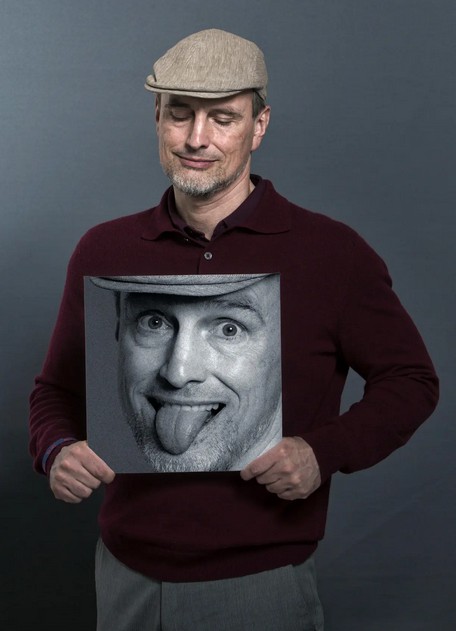
Jürgen Schmidhuber is considered the father of modern AI: his algorithms enable, among other groundbreaking AI-solutions, Siri, Alexa and Google Assistant. They run on billions of smart devices and would have made him and his co-creators incredibly wealthy — if they could have been patented.
But patenting pure algorithms or AI methods is extremely difficult, if not impossible. Software patents require solving a technical problem by technical means; abstract ideas alone are not sufficient. But if pure AI itself cannot be protected, what is the next best solution? It’s monopolizing the technical enablers of the next stages of development — something that is very difficult, if not impossible, to circumvent.
So what’s the next and ultimate development stage? A truly generalized, conscious AI.
The prospect of such a step unsettles not only religious people and philosophers. Yet, as Ashby noted, the romance of knowledge is ultimately only another form of unfulfilled love: “whether [… s.o./sth.] can be ‘really’ intelligent is not a question for the philosophers: they know nothing about […] intelligence.” And indeed, only few people could honestly be called “crowns of creation.” Even so-called human “geniuses” are never universally ingenious; like today’s superhumanly powerful AI systems, they are usually specialized. Nietzsche expressed it pointedly: “I have never believed the people when they speak of great human beings — and I maintained my belief that it was an inverse cripple who had too little of everything and too much of one thing.”
Fear has always been a poor advisor. Technology races are not won by self-restraint — we are limited enough as it is. Those who slow down in the global technological race are bound to lose, with far-reaching consequences.
Enabling the next and final steps toward an ultimately powerful AI is a matter of technical integration and coordination. This also satisfies the “technicality” requirements for institutional protection rights. After all, AI will not become truly superhuman unless we enable superhuman plasticity in neural networks.
Here’s a simple, efficient solution to these problems.
© 2020-2025 Dr. Thomas R. Glueck, Munich, Germany. All rights reserved.
 cybernetics, system design & ultimate taboos